pokémon etiketine sahip kayıtlar gösteriliyor. Tüm kayıtları göster

16 Haziran 2022 Perşembe

Pokemon, Sequels and Perception of Change

If you see discussions about video games online you likely have heard about a sentiment that Pokemon as a series is stale and unwilling to change. Looking at the “mainline”[1] games at a glance it is easy to see why: All of the games share a wide variety of tropes: The player begins the adventure in a small cozy town, chooses a starter between Fire/Water/Grass types, engages in many simplistic battles, has to defeat regional leaders that usually stick to a single type, gets the ability to make their Pokemon cut grass, swim and fly, cleanses their region from some type of evil team, faces the cover legendary Pokemon, reaches the credits by defeating the champion and entering the hall of fame and after this, is able to access a couple of side challenges, new areas, mini-games and of course, can complete the Pokedex by “catching them all”. Longtime followers of the series are not wrong about something feeling off, the series has several problems regarding its presentation and ability to satisfy the myriad of  desires of its huge and diverse fanbase. Stagnation is not one of them.

Flashy Changes

Pokemon games treat their features as disposable. Often these are tech gimmicks: Companion apps, peripherals, minigames to show off the console capabilities and make co-op more appealing. Sometimes certain features feel more experimental and don’t make the cut in sequels. Despite looking light on big changes, Black & White (2010) in particular are notable with the number of orphaned mechanics. Do you remember Triple Battles?  Some mechanics come and go between games. Heartgold & Soulsilver (2009) allow the player to walk around with their mon. If you have enjoyed that you can also see it again in Lets Go:Pikachu & Eevee (2018)… in a more limited form.  Some cuts are more brutal. Mega Evolutions were a highly advertised feature for 2 generations and then disappeared into the aether. Remember Battle Frontier? Press F to pay respects…

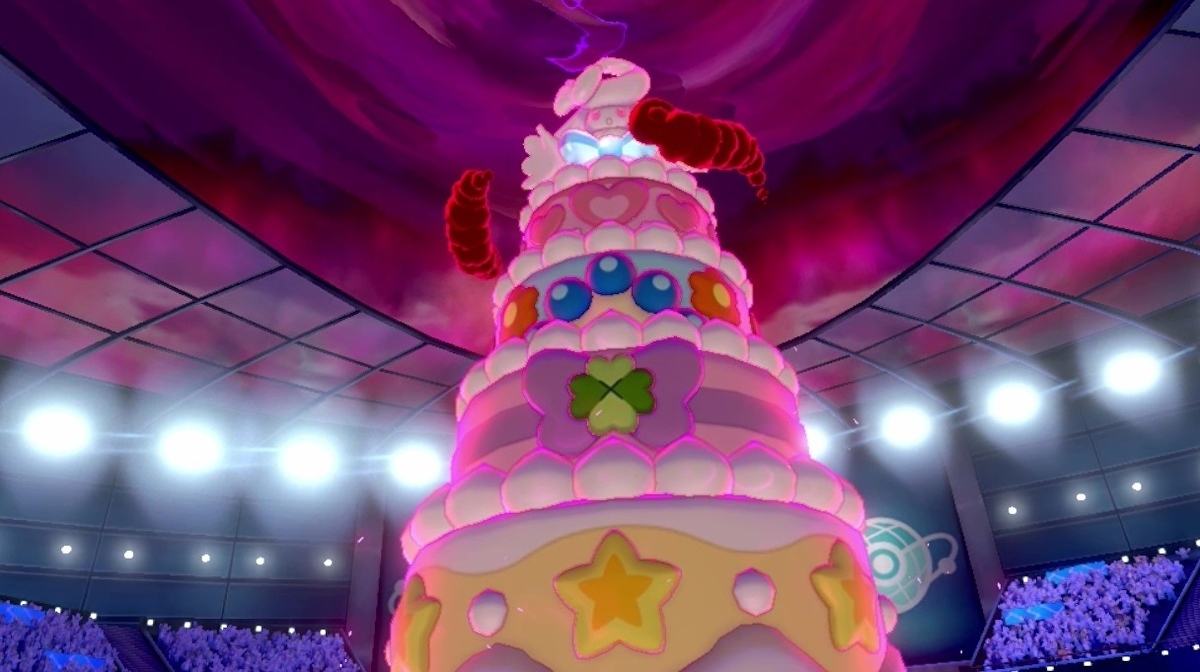
From this angle, Pokemon games certainly “innovate” a lot, too much perhaps. “Oh these aren’t real, just gimmicks” you might say. But they have real thought and effort behind them all the same. They don’t feel tangible in large part because they don’t stick around. This is a constant in game history: No matter how much players may speak of innovation, they always seek familiarity in sequels. And this creates a paradoxical response to Pokemon games, people think Pokemon is stale because it changes too much. One thing you might like in a game may disappear completely in the next. Sword & Shield (2019) gathered so much controversy because it showed that even the pocket monsters themselves aren’t safe from the cutting floor.

Is this merciless approach a good thing? You can argue that they make games more memorable in retrospect and it is admirable that Gamefreak commits so much to short-lived features. Many of the cutting decisions are justifiable in isolation. While there were many potential Mega Evolutions I would like to see, I still prefer regular evolutions and regional variants. I love Battle Frontier but it’s quite involved for a post-game attraction that most players don’t even attempt to complete. I also still stand in defense of the Dexit,[2] a limited, rotating roster can be potentially great for the series. Feature creep is also a real design problem, the designers can’t just continuously add and mix mechanics without risking oversaturation. Nevertheless, losing major features is never fun and especially so when they’re robbed from reaching full maturity. As much as people focus over the lightning-in-the-bottle achievements of pioneer games, most gameplay language and conveniences we take for granted today are the result of gradual perfection over multiple different series, development teams and even decades.

Gradual Changes

Thankfully, Pokemon made many gradual changes since the first sequels Gold & Silver (1999) and Crystal (2000) were released. It’s not a coincidence that the games which feel like a proper sequels the most are very well remembered among fans. Generation 2 games truly codified most of the big and small features Pokemon is known for today, from weather moves to being able to play as a girl. But really, every generation has made similar leaps. Gen 3 entries brought the familiar sprites to the games, added key mechanics like Natures and Double Battles. Gen 4 added many staple items, reworked how the damage was calculated and made many improvements that made battling with other players viable. I have stated that Gen 5 was full of experimental features, but the developers seem to have kept a lot of ideas around. Z Crystals in Gen 7 look like they have evolved from the abandoned Gem mechanic, they were then developed further into Dynamax feature. Pet interactions and Hidden Abilities from the Dream World feature were realized much better in subsequent games. These are still relatively big compared to the many subtle additions to the games. Quality of Life improvements, small adjustments in base Pokemon stats, updated mechanics, easier navigation of the world, more moves, more items…Not only that, these stuff aren’t just added for the sake of more content. In the last few gens in particular Gamefreak seems very interested in making mons more life-like and increasing the tactical depth of the games And of course, every new generation comes with a host of new and old but painted critters. When listing like this in conjunction with the big gimmicks added, tech migration and frantic-looking development cycle this is nothing short of impressive. Compared with other venerable game series, and I use this word rarely when talking about media, this assessment becomes objectively true. This is not really about whether the changes are good, or worth paying attention to, the right kind or unable to answer a core dissatisfaction. (ex. “battles should be real time!!!”) Imagine a new Shin Megami Tensei game with 100 previously unseen demons or an Elder Scrolls sequel with 30 new spells and 2 new spell categories. The level of change Pokemon games go through are usually only seen in reboots to old and dormant series.

The changes are impactful too. Some object to this by claiming that mechanical changes are mostly relevant to the competitive scene. In truth, the metagame always finds its way one way or another, but even minor changes make the older games feel weird. Despite replaying the games over the years again and again, today I cannot return to the games older than Diamond & Pearl (2006). Sure, when you pick the Water starter and go through battles by choosing the strongest Water attack available, they are not that different. But when I put any amount of thought into the mechanics, I cannot just get through the incredibly sparse distribution of level up moves, not having future evolutions around, so many mons being impossibly grating to level up or near useless in battles. After playing B & W  I instinctively expected TMs [3] to be reusable. But even those games feel a little strange with the absence of the Fairy type. And I am not alone in such feelings. S & S sparked a controversy by a decision to have a previously optional item that gives passive mons in the trainer’s party experience always switched on. Many thought that it made the game too easy, which is another fascinating topic related to fan perception, but even this minor change clearly mattered. 

This is why it is ignorant to criticize the series as being stagnant. This applies to most other series too. People often discuss every minor difference in Souls games in meticulous detail but to onlookers like me, it’s just an armored person rolling around and hitting big weepy monsters with a broadsword. In some sense, both observations are equally correct. When two things have many similarities the differences only become more visible on a close look. And it is fine to be ignorant about the details of a game, but it is not fine to pass the ignorance as insightful criticism. Pokemon is unlikely to be affected by some loud voices in social media, but higher standards for game criticism can only improve the way people perceive games. Players owe themselves and the creators the chance to think more seriously about games and at least should be critical enough to not want groundbreaking changes and still expect the games to evoke childhood nostalgia at the same time. 

That Which Remains the Same

Having written all this, there are notables cases where people are justified to feel a stagnant air in the series:

The visuals have been… underwhelming. But before that point, let’s address a common type of argument: Attributing clear creative decisions to laziness or pure irrationality is plainly bad criticism. Pokemon’s visuals are like that in part because there is a faithful commitment to minimalism and consistency.  It isn’t that helpful to compare mainline games’ visuals to games like Pokemon Stadium(1999). Those games were designed with spectacle in mind. Mainline games give brief and unimpressive animations to basic, low damage, early game moves like Tackle or Scratch because battles are intended to be reasonably fast. But Stadium-like games don’t have such concerns, they can take their sweet time in long wind-ups and reactions. Minimalist visuals also fit handheld screens better, for example flashing screens can become overwhelming. [4] Minimalism also makes consistency easier. Majority of the moves in the games share animations throughout the series. [5] Environments, rooms, and human NPC designs are generally unmistakably “Pokemon”. Even the monsters themselves avoid overly busy designs and are able to carry a level of consistency between a ball with eyes and a mythical dragon while also avoiding mons blending into one another. And this direction has paid off: At its worst the visuals have still kept a level of charm despite whatever limitations they have been under. At their best they burst with life and emotion. And yet... 

I have always had this uneasy feeling that the visuals have been a little low-balled. Not true for the first two generations, in fact they have tested the limits of their platforms, Gen 3 has a serviceable “this is a Pokemon game” look but not much more, Gen 4 is crisp and colorful enough to serve as a baseline for the visual quality of the series but even less experimental than Gen 3. Gen 5 looks admirable in spades but is let down by the hardware somewhat, Gen 6 has a lot of ideas but experienced the ever-painful switch to 3D, Gen 7 is better at realizing these ideas but lacks the passive benefits of a platform upgrade. Gen 8 without a doubt occasionally has the best looks of any Pokemon game so far, at the same time Pokemon Brilliant Diamond & Shining Pearl (2021) uses funko-pop looking characters in the overworld. The series’ visuals became brighter, sharper, more colorful, jumped to 3D, improved upon that, but as the years passed and hardware became more and more powerful, the expectation of a true breakthrough grew larger and larger and so far, it has yet to be fulfilled. Even now; there are no expressive human faces, no consistently fluid animation, no true collusion or particle physics, no real lightning, no detailed textures, nothing to show people that these are AAA console games from the current period. The series doesn't have to implement all or any of these features to look satisfyingly beautiful, and it should be stressed that battles being turn-based or aiming for a particular kind of stylized graphics is not the problem, but it needs to do something to make people say “Wow! This looks slick and new!” but for the moment, no matter how beautiful the visuals can be in places, they can’t hide the scars of troubled development. When discussing the graphics, the players might have unreasonable expectations, focus on the wrong things or make asinine assumptions about how game development works but the disappointment they feel is not cynical.

Another factor that doesn’t bring any favors is that the games don’t really require that much thought to play. Players don’t really have to engage with the big features and subtle changes on a deep level. Players often come to see the promised new content and then move on. When a game is presented as an amusement park, players treat it like one. You may design the attractions as intricately as you can, but if someone comes for a simple merry-go-round ride, they will not pay too much attention. And the problem isn’t easily solved by a difficulty-mode damage modifier, higher enemy levels or adding action gimmicks to battles. The games’ easy battles are not some kind of destructive flaw either, the series owes part of its charm to being able to be so non-threatening and non-demanding no matter what kind of player someone is, what their mood is, how busy they seem to be. You can always open up a game, lose yourself in a whimsical world and enjoy hanging out with dangerous pets for a couple of hours. Being challenging enough to demand dedication or create frustration at any level creates a mental filter for a lot of players. The solution is not obvious here. I have a lot of ideas for a Pokemon game that would cater to me the most but are they reasonable to ask for without compromising anything from the friendliness of the series? Hard to say. But perhaps fine-tuning flashy features like Mega Evolutions or Dynamax instead of throwing them away would go a long way towards an impression of progress in the eyes of returning players.

This task certainly would be much easier, unnecessary even, if the story played a heavier part. Here, Final Fantasy series is a good point of comparison. Like Pokemon, FF loves throwing away major game mechanics in each new installment and like Pokemon, many features across FF titles fall behind their true potential. Some of the games even gained notoriety for their design choices. But the series have never garnered a reputation for growing stale in huge part because the games all promise a completely new epic story in a unique setting. On Gamefreak’s part hand, they have always been keen on experimentation. For example, I am quite impressed with how B & W is able to characterize “N” by leaving most of it to the player's observation. A lot of games and even movies or books are not confident enough in their writing or the audience to do so. Even G & S gives a character profile for your rival deeper than anyone has ever asked for a Gameboy Color game. There is a actually lot to appreciate in the settings of Pokemon game, but you need to have an eye for fine details.  But no matter how high they aim for their writing, it cannot overshadow the primary adventure people seek in the series. The main loop of the mainline games are heavily player-driven. The most memorable moments come from Shiny encounters, fainting a legendary mon on accident, a random battle that is surprisingly difficult, becoming champion with the guys you have been attached to or navigating self-imposed rules, not rising moments of tension or a punching line from a character. The real story of any mainline Pokemon game is the player’s journey to prove themselves as a trainer. A heavily guided tale that wants attention to dialogue is fundamentally different and likely gravely incompatible. For many players such a shift would be unpleasant not only because it distracts from the parts they care about but similar to a noticeable increase in complexity, it turns playing the game into an emotional investment. Not only would this make “just picking up” the game more difficult, if the investment isn’t rewarded satisfactorily it becomes actively hostile to future re-runs. In particular, it might bore children rather easily.

Conclusion

Pokemon games have experimented and evolved a lot in each sequel. In fact a good part of loud complaints come from disliking the changes, such as the switch to the 3D graphics, gradual embrace of the open world gameplay, removed features, discarding updated releases in favor of DLCs, the perceived downgrade in game’s difficulty and more. [6] But with a series as old as Pokemon, it is almost inevitable to feel a certain degree of weariness or  develop unfulfilled expectations at some point, and certain key design choices don't help with the impression. This matters not for the success of the games. The core appeal alone is strong enough to draw a lot of people. Even if the games truly became low-effort advertisements for merchandise, short of stopping creating new pocket monsters altogether, the series will not stop raking in cash. This matters because it gives insight about us. We are not great at perceiving change when it’s slow but also similarly bad at it when it’s fast enough to seem temporary. Inversely we often mistake the changes in ourselves for the change of the world around us. This is a weakness we need to overcome to be able to critique media, and sequels in particular without limiting ourselves but our expectations. It is relevant for the creators on how to approach their fanbases and future sequels. Sequels, expansions, DLCs and alike are useful for building on the good ideas and testing their limits, like changing a particular variable in a controlled environment. But if the sequels cannot walk in synth with the players, they can sow the seeds for a paradoxical desire for orthodoxy and reform at the same time. Players often can feel something is wrong but will often misidentify the issues. An important challenge for any developer is to look at the criticism and determine what’s actually causing the problem. Those who are dedicated to games critique have the power and responsibility to direct the discourse into a productive place. My tiny blog doesn’t matter at all at such a scale of course, but video creators and journalists with large audiences definitely influence how people discuss and perceive games. At least we should be able to see through the fog of hype and outrage.

Some ideas and franchises can be too big to extinguish but they can certainly burn their creators away. Pokemon itself has nearly become an example. While this is chiefly corporations’ fault, on our end, we can at least not be so sensitive about change (either in favor or against it) to take personal offense at creative decisions.

In any case Pocket Monsters provides us boundless ideas to ponder and gives us the chance to explore the human condition. Well, at least mine, it has claimed part of my brain for itself.

This article is written thanks to my dearest Patrons, namely: Effy, Laura Watson,  Makkovar, Morgan, Olympia, Otakundead, Sasha. Also thanks to Alex(@punishedgenetic on Twitter) for his perfect editing work.

----

[1] A designation that groups every game that adds a new generation of monsters with remakes and remasters of these games.

[2] The decision to not include a fairly big number of Pokemon in S & S in any shape of form. A lot of more were added with DLCs later but as of writing this 234 of them are still unavailable. This shocked the fans because it was completely unprecedented for a mainline Pokemon game, you could always theoretically obtain all the monsters in any of the previous games up to the game’s generation. Also the statements from the devs did not exactly help.

[3] Items that teach moves to Pokemon.

[4] In the first season of Pokemon anime, an episode titled “Electric Soldier Pokemon” caused episodes of epilepsy among viewers, some of them became hospitalized. It is not far-fetched to assume that from then on any decision about Pokemon products has kept this in mind.

[5] I don’t mean sharing actual animation rigs or meshes of course

[6] This is a topic fascinating enough to have an article on its own.


23 Aralık 2020 Çarşamba

Grinding


I define grinding as “repetitious combat whose primary goal is to increase various statistics about a character ”. It is most commonly associated with RPGs; Players grinding for character levels, items or currency is a natural part of these games. Here, I will discuss some bad and good examples, with various other aspects of a game related to grinding, like experience systems, side bosses, combat systems and so on. Spoilers for Undertale, Persona 3/4, Trails, Withcher 3 ahead, only discussed as minimally as possible.

Definition

Dragon Quest(1986) has set the basic template for console RPGs. Games made of same cloth are somewhat simplistic in terms of mechanics and presentation. The main activity in those games is to get through various dungeons and grind a lot to defeat the next set of enemies. The games not only require grinding, but it is the bread and butter of these games. On the discussion of games, “grinding” is sometimes used to refer any amount of dungeon exploration, or exclusively in a derisive way. In contrast, my definition of grinding is more useful, as when I say a game “requires grinding” or “grindy”, it means the game asks or heavily incentives the player to spend a non-trivial amount of time to engage in repetitious encounters for a certain reward, and for some games, this is part of the appeal.

Emphasizing the appeal of grinding helps us to distinguish it from “padding”, where the game slows down player’s progress arbitrarily. Certainly, badly implemented grinding might feel like padding but the earnestness is the key distinction: Grinding Magikarp or Abra in Pokémon Red(1995) might be rather monotonous, but it clearly is designed to foster a “training hard to get strong” mentality. More cynical designs grind the game to halt to compensate for lack of content, likely because of troubled development. Or something far worse, strong arm them into buying microtransactions. I have nothing but contempt for this kind of design. Some say “Oh it’s not a big deal. Actually it’s kind of nice to get some experience boost”. No! The game is designed to require the boost! It is the worst gaming design trend alongside with making the players gamble with real money. Ever. I will never entertain it as an artistic decision. Stuff like this doesn’t require much discussion, moving on...

Also, while grinding is no doubt an important part of MMOs, everything here pertains to single player only, because I don’t play multi-player RPGs. My brief experience with them is not very good and many of them also guilty of “skip grinding for money” nonsense, but they feel like a whole separate realm on their own and deserve more than my limited viewpoint.

Avoiding Grinding

As games became more sophisticated, they began to reduce or outright minimize grinding, instead moving towards rewarding player’s ingenuity or softening the gameplay to put the rich story or presentation in the center stage. Final Fantasy 7(1997) is an example of both; there are lots of items, spells, special moves that turns the game into a joke; but even without going all out to become god-like powerful, the game is quite gentle, as it is very focused on telling a grand cinematic story, filled with lots of set pieces and mini game. (In other words, it is the prestige game of it’s time) Some games tightly control how much player can progress. In a character-oriented RPG like Fallout: New Vegas(2008), overwhelmingly large portion of experience points and valuable items are gained from quests, combat exhausts non-trivial resources and the player can make a character that can get out of situations without (much) combat. Witcher 3: Wild Hunt(2015) is constructed very similar sans having non-combat builds, but in this case the approach fails and renders the game bereft of any sense of progression. There is a skill tree, but it mostly offers minor stat bonuses: Geralt(the player character) can make their force shield slightly bigger and start to breathe fire at thirty hours in, not exactly the most exciting thing in a fantasy game. In F:NV, leveling up gives cool perks and gimmicks like: getting stronger with radiation, being able to carry a lot, splattering enemies into guts or unlocking gay energy. In contrast, Witcher 3 feels like it is an RPG only to justify its huge open-world, Geralt starts an ace monster hunter and remains an ace monster hunter; what do levels even convey to the player?

Some games use intuitive leveling systems to nudge the player away from grinding too much. Trails/Kiseki series are quite great at this. The amount of experience earned in a battle is much higher if the characters are at lower levels. Conversely, after passing a certain threshold, fighting similar enemies will start to yield a much lower amount of experience. This is quite easy to follow because the experience gained may drop to half just after going up one level for example. Players are spared from worrying about being under or overleveled both.

Some games even turn into a mini-game of its own. It’s fairly common to have special enemies which are tricky to find or defeat but will yield a lot of experience points if done so. Dragon Quest has the famed “metal slime”, Trails in the Sky: FC(2004) has a creature named “pom”. A different and more energetic approach can be found in Trails of Cold Steel(2013). During a battle the game rewards certain actions with experience point multipliers: Doing combos, hitting multiple enemies at once, being first one to hit, using weaknesses etc. This is a really great way to making players seriously pay attention to regular battles without making them excruciatingly difficult.

Some games employ a set of measures to dissuade or outright prevent the player from grinding. In Persona 3(2007), players get through a singular, humongous dungeon. However, it is not open to exploration in its entirety from the start, instead it is gradually opened as the story progresses. Spending too much time in the dungeon will literally make the characters tired and insisting to continue on will make them sick, making them unable to come to dungeons for a few in-game days entirely. At times, they will refuse to come along for personal reasons. Also, in-game days have limited time slots and there are often other activities to do instead of going to dungeons. Ideally, the player should go to dungeon only when it’s necessary. This makes sense narratively too, as the dungeons are not exactly pleasant to be in, conveyed both by it’s visual design and characters talking of it’s oppressive, sickening atmosphere. To ensure that players won’t feel pressured to grind too much, before the day of mandatory story fights, the characters will not complain about being tired; so that players have always a last-minute chance of grinding as they want. Also, the mandatory fights will be always easier than their counterparts in the dungeon. Therefore, being able to reach the limit imposed by the story will ensure that players are more than capable for the story fights.

Level-scaling is a common anti-grinding feature: Instead of enemies becoming stronger as the game progresses, they become stronger as the player gain levels. In theory, it allows a consistent level of challenge without players being too strong or needing to grind. Unfortunately, this method is often implemented in rather problematic ways:

  • A common issue is that games do not tell that they have level-scaling. Players can often divine it only when it becomes too late. Elder Scrolls 4: Oblivion(2006) is quite egregious because of this. The game has a overly complicated (or insufficiently explained) class/skill system. It’s quite possible to end up with a underpowered character because of this. It doesn’t help that there are a lot of at-best-situationally-useful non-combat skills, even basic activities like running might cause the player to level-up depending on the build. [1]

  • When the level-scaling makes the game more difficult on higher levels, some players avoid leveling. In Oblivion, there is a somewhat counter-intuitive[1] way to make a low-level build. In Final Fantasy 8(1998), mandatory fights do not yield experience points, so the method is to avoid non-mandatory fights as much as possible. Doing this makes the player unable to access certain content; in Oblivion some quests and powerful items are locked behind levels, in FF8, the player will only have access to basic spells. Ironically, level-scaling doesn’t even reduce grinding. In fact, it might even cause more grinding in Oblivion. [1] And in FF8, the time spent in battles do not really decrease because the player still needs to farm magic [2] from enemies, which is, quite frankly, much more monotonous than simply defeating monsters in battle.

  • Fundamentally, level-scaling dampens the sense of becoming powerful. Things like turning a previously annoying adversary into a joke, seeing a previous boss demoted to a regular enemy, realizing that I am able to make just a little more damage are what makes RPGs so satisfying. Level-scaling also makes the game world feel more artificial, as it is quite obvious when random bandits start to wear golden armor just to match up with the player.

Level-scaling can be successful however. It works in Elder Scrolls 5: Skyrim(2011) quite nicely as it is subtle enough to be not noticed by many people, I have learned its existence only after reading about it as well. First, instead of continuously growing stronger, enemies and dungeons have their own unique level ranges where the player can still be too weak(bears) or strong(basic undead) for them. Second, there is some degree of randomness so that occasionally the player might get weaker or stronger enemies. Third and perhaps most importantly, the game’s skill system is intuitive and the game is forgiving enough that players are unlikely to find themselves in a considerably disadvantageousbuild. (It also helps that Skyrim doesn’t really pretend that skills like “speech matters” at all). This results in a game truly beautiful in it’s simplicity. It’s kind of wonderful to just walk around the world without ever worrying about being prepared for a fight: If something is big and scary-looking or throws lightning bolts, all needs to be done is to go away and come back later. There are only a few end-game bosses that warrant any kind of planning, everything else just blends into one seamless adventure, it’s very likely that when player arrives somewhere they will be already strong enough to take whatever they encounter. The game can do this while also still being able to make the player that they are actually getting more powerful. This is a not a trivial achievement for such an open-ended game.

Harsher anti-grinding measures can be effective if the fantasy of becoming stronger can be achieved in other ways. Demon’s Souls(2009) and its sequels are among the few Action RPGs series where “action” and “RPG” parts are both important. While grinding is a long process with diminishing returns due to level-scaling, one way to beat any kind of enemy is just responding to their attack patterns. So, the game dilutes the more traditional, statistical progression of RPGs and puts the player’s gradual mastery of combat in its place. The game also features lots of different weapons and equipment, there are a lot of hidden ways to get really powerful. It’s also possible to summon NPCs or other players to help out with to deal with bosses. The game never outright forbids grinding but takes great lengths to make sure that the player adopts a mindset which rejects grinding and accepts challenges head on. Which would be absolutely dreadful to play personally, but it is quite interesting to watch how it affects other players’ behavior nonetheless.

As I discussed in previous posts, when a game has unconventional or counter-intuitive mechanisms it’s very important to seed the correct mentality in the player. Undertale(2015) is famously very anti-grind and this is woven into the very core of the game. Amazingly this doesn’t actually trivialize the combat in the game, player is merely guided against trying to gain experience and can only get the happiest ending if they avoid gaining experience entirely. If the player goes the opposite way however, they will find the that that they have rendered the area they are in completely devoid of life. If they choose to do this from very beginning and continue on the path of sin, the game will enter to a state of constant, dreary, bleak tone. Most encounters will be total pushovers, expect for exactly two. The first one, while isn’t that difficult, catches the players off-guard and more importantly makes it clear that player brought this upon themselves. The second, more famous,difficult encounter takes this up to eleven. While reportedly not being exceptionally tough for a regular of bullet hell games, it is still not only quite difficult for anyone who isn’t accustomed to, it is difficult in the most player-unfriendly ways. The game will begin the fight in the middle of a conversation, feign mercy, mock the player for dying and after a long fight abruptly stop to trick them into quitting. Moreover, every hit only causes 1 damage but they also drain all hit points until only 1 left, so health and armor is useless. The enemy has only 1 hit point, but they will evade all attacks until the very end, so attacks and weapons are useless. In other words, all grinding is utterly meaningless. And, if players persevere through this fight and reach to end of the game, all they are rewarded with is a blank space to stare into, have game crashing to desktop indefinitely or an offer to start the game anew (which by one interpretation, will not even cleanse the evil) The entire game is an elaborate joke on the very concept of grinding. However, it’s important that the game does not tut-tut the player for playing an undesired way but rather it challenges them to question their motivations: Did they reach to the end just because they could? Is that worth it? Perhaps grinding is actually a waste of time sometimes, perhaps not every game needs to be “completed”.

Side Content Grinding

Save for a niche section of games, RPGs of the 2000s and 2010s tend to allow players to get through the “main story” without too much hassle. They will rather put more time-wasting things on the side, such as things to collect; quests to finish, and of course, optional enemies to defeat. “The legendary epic sword of coolness” isn’t for defeating the final boss, that would be an overkill no, it is for the ultimate secret boss. Unfortunately, despite how I can enjoy long RPGs and grinding, Undertale is right about this kind of content: I am often unable to muster enough motivation to care about these extra bosses. They seem to only exist for the sake of completion with hardly any larger context. What does defeating “Emerald Weapon” mean in FF7, that problem fixes itself in the end anyway. Or “Dark Valefor” in Final Fantasy 10(2000) for that matter, it literally comes out of nowhere? Why bother with “Satan” in LİSA: The Painful(2014), he is just some dude whom the players will not even see unless they go out of their way to find him? Such extra bosses often drop remarkable loot but why would someone who already defeated the toughest enemy ever need that? They further serve to highlight how much this kind of content only exist to be bragged about; both for advertising “hours of extra content” and to satiate the drive of completionism alike.

In theory, if something is fun then it’s just fun but even modest embellishments can really make things quite interesting. “Death” from Persona 3 is a fun extra boss because of this: “Death” essentially serves to make sure that people won’t linger on the same floor for too long. It is not only visually striking with its imposing body and over-sized revolvers, but hearing its approach with growlings and rattlings of the chains on its body is appropriately eerie for a creature that will crush the player party easily for a long, long time. Towards the end of the game the player finally becomes barely strong enough to turn the tables on it. Sure, defeating it won’t change anything narratively but it is actually more thematic that way; after all “Death” is a manifestation of the fear of mortality, obviously it won’t go away completely. And, it just feels nice to get some personal revenge and have an opportunity to realize how far I have come. Facing death is what all characters do in P3, so it puts a neat bow on that theme too. More importantly, defeating it doesn’t require shouldering mountains, it only demands the correct strategy and some luck. It is also an interesting inversion of most extra bosses. Instead of being there to justify grinding, it rewards the ability to grind more when defeated. It unlocks extra floors of the dungeon. While it isn’t necessary for finishing the game, it’s still quite neat: It gives the player something to do in the last stretch[3] of the game, allows them to easily reach the level cap(addressing a pet peeve of mine) and gives the opportunity to access and use absurdly powerful end-game Personae[4]. This system both actively enables completionist players by rewarding their efforts by making the game easier to complete and can guide the usually-not-so-completionist- players(me) into completing the game just by just having fun naturally. In contrast, in Persona 4(2008), Death is just a hidden boss in the “new game plus”. It just exists, with no relevance to anything else in the game. Players can get a strong item by defeating it, I guess. Whatever. At least it makes a good showcase for the argument that, difference between a great and an alright game indeed lies in the details.

Another obstacle to create meaningful motivation to grind is that games tend to have narratives in conflict with the idea of grinding. Combat is often something that just happens to the characters, no matter how many is slain by character’s hands. Characters tend to be either against or indifferent to combat; and if the game has a serious narrative concerning loss of lives, explores non-violent solutions in its role-play or has a degree of urgency in regards to “saving the world”, it then feels quite dissonant to ask the player to take time to gather a hundred monster toes for the perfect armor. This is one reason why some RPGs feature eager, fledgling adventurers as their protagonist. Fighting repeatedly makes a lot of sense when the player’s party also enjoys doing them. In Trails In The Sky, fighting monsters is a part of main cast’s job and in Trails of Cold Steel, basic battles are an important piece in worldbuilding, showing that the authorities are neglectful in their promises of defense. A lot of characters in both series have a deep relationship with combat, everything from the weapons they use, why they fight, their strengths and weaknesses are all part of their character. When a character is able to jump in the air and do a cool sword move, that’s just part of the world. While it is obviously unrealistic, the series has mostly consistent and subtle rules on whether a battle will be deadly or not. Slaying gods is not uncommon in video games but they don’t usually explore as to what it means that main character is able to slay a god or single-handedly prevent an apocalypse. This actually weakens the power fantasy somewhat. It makes just a little more difficult to care about min-maxing stats, much less about actually taking on some random overpowered boss. In contrast,feats of main casts in Trails games feels much more impressive precisely because it's made clear that they are not even among the strongest warriors, they are just bunch of brave young people.

Combat

While motivation to grind is certainly important, it’s secondary to the quality of combat itself. The combat should avoid banality and hair-splitting difficulty both at the same time. Even a basic damage multiplier or rock-paper-scissor weakness system goes a long way to stop battles from being sleep-inducing. The stat gains by combat should be at a reasonable pace. Increasing levels or advancement in skills trees should give a palpable sense of improvement but also the overall time spent in combat loops should not be too long. Navigation in menus, the time it takes to execute commands (being able to automate them or turning off animations), the rate where the player needs to re-stock resources to continue grinding. Of course, as I discussed earlier, allowing player to be smart at leveling up certainly helps even when grinding is inevitable.

Let’s analyze Pokemon series from this viewpoint then. Motivation for grinding is implicit in the series: Whether the player desiring to just having a full team in the final story mon, training a late-found or new-born mons or preparing for competitive battling, one thing to be sure is that there is no convenient way to level up fast, some games allow to battle with same trainers more than once(which gives more experience than wild pokemon), there are some items which helps, traded mons also get experience faster but… overall, it’s quite slow. [5] It’s certain that if the player wants battle-ready mons, they will have to spend quite amount of time, defeating same mons over and over. The one alternative is to leave it them to day care and let them level up automatically as the player walks around the world but not only it’s quite limited and slow, it requires constant checks if the player doesn’t want to lose certain moves. [6] However, what makes grinding in Pokemon so dreadful is that not only the battles are so mindless, they also require frequent backtracking to recharge their moves. There isn’t even an auto-battle system. And sure, player can just watch or play something else when they are doing it but… why? Like I play Pokémon because, I want to battle with fun pocket monsters. Why I need to put hours and hours on this, why I can’t just catch something and have it be active member of my team without having nonsensical concerns? And people actually train mons for competitive battles, lots of ones, without using some sort of emulator turbo? This is probably my primary psychological block to play a Pokemon game. I just want to play with various different mons and have fun for couple of hours, that’s often impossible to do without using some kind of generator.[7]

Thankfully, newer generations made some improvements on this issue. The most important of them is that battles finally grant team-wide experience. Wow. On the one hand, it still has grinding, especially one is serious about competitive play. On the other hand, being able to grind six mons at once is still massive and more importantly, the player is now wholly free to experiment with different mons as they like.I am forever baffled at the people who whine about this. Oh, it is too easy, they say. Too easy. Tackling this aspect of the series is outside of this post’s scope, but for now, if I may, allow me to say this: I am still in utmost sadness and pain that Gayme Freak dumbed down this hardcore series for the peasants but having to level up a Beldum was never quite peak gameplay, so it’s not all that bad, dear gamers.

Conclusion

We have examined different approaches to tackle the question of grinding. Classic RPGs are very openly grindy, but they are understandably primitive in their design and this might make sheer monotonousness of such games rather hard to swallow. As the depth of mechanical, textual and audio visual elements have increased, games began to favor livelier and crunchier designs over long-term, gradual satisfaction. Some games have extensive side content, but they tend to be lacking in appeal. There are games with excellent combat mechanics, addictive game-loops or a narrative that strongly contextualizes gameplay but there really doesn’t seem to be any game that tries to strike at the very heart of grinding. There are repetitive games with astounding quality, but never a game has been astounding because of it’s repetition…

Well… no…

There is one….


[1] On character creation, players picks certain skills as “major”, the other becoming “minor”. Skills are developed by using them, growing enough causes a level up and grants boots to the stats which are related to the skill player has developed. To prevent leveling, it’s possible to pick irrelevant skills as major, this way player can grind their skills while also keeping enemies weaker and don’t have to deal with keeping track of their skill growth. This might actually end up increase grinding because players will miss the starting boost to major skills, which can be rather problematic to magic-using characters.

[2] In Final Fantasy 8, the main method to obtain magic is to literally absorb them from enemies using “draw” command. Having magic is also the main way to boost the character stats, so having them maxed out is optimal for every character. Only a small amount can be drawn at a time so this process is quite long, especially if the player also uses the magic for attacking and needs to re-fill every so often.

[3] In last month of Persona 3, the only grand story event left is to wait for the last confrontation. The player is likely reach to end of the dungeon long before the month ends and has already completed most of the other side activities; often, only thing to do with free time is to skip to the next day. Given the rather melancholic tone in the game, having more dungeon to explore is a genuinely refreshing alternative.

[4] In the game, “persona” refers to the physical manifestation of one’s emotions, in the form of various mythological figures. Characters fight by summoning their personae

[5] For a detailed look: https://bulbapedia.bulbagarden.net/wiki/Experience

[6] Mons learn new moves on leveling up and can learn only four at a time. Normally, the game asks you to whether swap the new move with an old one, however; in day care, new moves are automatically sapped with older ones top to bottom. Recovering forgotten moves is not trivial, actually impossible in some cases, particularly in the older games.

[7] Aside from regular cheating devices, there is software called Pokegen which can create Pokémon, items and other stuff inside an existing save file. It’s rather fun to use, and especially useful to facilitate unusual playthroughs.

This article is written thanks to my dearest Patrons and special thanks to: Acelin, Laura Watson, MasterofCubes, Makkovar, Morgan, Otakundead , Sasha and Spencer Gill.


13 Aralık 2020 Pazar

Games Can Be Fun From The Start


With the influence RPGs had on game design, many games prefer to keep things simple in the beginning and open up gradually as the player progresses. This ensures that player can learn how to play without getting overwhelmed and that the game doesn’t run out of new gimmicks early on. However, it can also make the early game somewhat dull, making it feel like playing a lesser game. I believe most developers do this out of a sense of unspoken tradition, as it’s often not a large enough problem to get a lot of complaint or attention. Still, rocking the boat can be worth it, and games can be the most exciting as they can be right from the beginning. Moreover, more fulfilling early games can greatly help to make games respect player’s time more. Here, I will discuss the ways games drag themselves down when it comes to early gameplay and how developers try to shake things up.

One effect this type of design might have is to make the game disproportionately difficult in the early hours. Bomberman(1985, Famicom) provides an excellent case study. At the each level of the game, the player needs to explode monsters and destroy walls to find the exit gate in a limited amount of time. The player can also find a permanent power-up in a similar way. In the first level, given that the player can use a single bomb at a time, a bomb has only one tile of explosion range and takes a couple of seconds to detonate; there is definitely a large amount of luck involved. The second level is barely any better, hopefully player has picked-up range power-up last level. The third level however is where the game drastically changes, as the player can get the power-up that enables them to make bobs explode as they place. All of a sudden, a dimension of tactics has opened and by gaining more, stronger bombs in each level, the gameplay turns into a race of creating the most effective and flashiest explosion chains. In comparison, the first two levels always feel like a chore. The game should have really started with the ability to detonate and perhaps with a couple of bombs at disposal. It is hard to understate how much of a bad first impression the game leaves by giving player almost nothing instead.

I have mentioned RPGs at the start, because the graduality is at the heart of these games and anyone who has ever played more than one of those games can attest to a situation like this: The game is filled with all these unique spells, guns, abilities, quests and so on; the player can build parties/characters and can make unique tactical decisions, but not in the beginning, no, they must first slaughter a hundred rats with a stick, so that they can bring a mystical herb to someone or whatever. However common this cliche might be, few games can claim to be close to Pokémon games(began in 1995) might be among the worst at introducing it’s fun contents. The series (I have played up to Gen 5) is famously shy about it’s mechanics, but even with the stuff it wants the player to use is locked away for an arbitrary amount of time. The impetus behind putting very strong mons to later sections of the game is clear, but some placements feel random nevertheless. The game gives the player little drips of new mons for most of the game,and upon arriving to somewhere like Safari Zone, they encounter a dozen new mons at once. Utilities like Move Deleter, Move Tutors and many useful items is locked away at least a few hours away. Is there any reason to not have bikes from the start? This is a game series filled with some of the most creative and intricate mechanics out there, but unless players go out of their way to dig deeper they will be conditioned to play an extremely simplistic game for a long time. At the very least, developers acknowledge this problem to a certain degree. In newer games, Pokémon tend to learn not only a lot of different moves, they will learn them very quickly as well. In Sword&Shield(2020, Switch), mons get experience quite fast, it seems like players can easily try the new mon they caught without worrying about being under-leveled. Starting with Black&White(2010, DS), TMs are re-usable, players can try them out without fear. There are certainly steps to get the game out of “common bugs and birds slam each other for a minute” slump, however timid they might be.

One way to make the early game more interesting is to turn it into a miniature of the whole game. Basically, if first 10, 30 or 90 minutes of a game can be reliably used as a demo for the game, then the game has a well-made beginning. Fallout: New Vegas(2008, PC) is an excellent example. The starting town, Goodsprings, is a just a recreation of the game in a smaller map. There is a way to use all skills, players can use conversations to persuade people, and they take part in a conflict that will have lasting effects. In fact it’s a little too good, as the game doesn’t reach to that level of robust design for a while after Goodsprings. This isn’t really a big deal to me thankfully, it’s much easier to deal with a slightly underwhelming mid-game than getting a bad taste right when the game begins.

Giving player a taste of what’s to come can create a strong first impression. Trails of Cold Steel(2013, PS3) begins in media res, the player is given a mid-level party with a sizable inventory and is thrown right into a dungeon. It is neither too difficult nor too easy. This opening speaks volumes about how strong the design of the game is ,as it can communicate its mechanics and warm the player up so effortlessly without any tutorial or over-simplification. When the story properly begins, the gameplay doesn’t feel any duller; it is just a smaller scope of the gameplay in the opening dungeon, and working up to that power level gives the player a clear direction. Tutorials themselves are not in the scope of this blog post but the fairly common design aim across big titles that is to please the hypothetical, easily-frustrated, impatient person who has never used any software before sometimes greatly hinder games’ openings.

If nothing else, players can just be provided with exciting stuff early on. Disgaea PC(2016, remake of 2003 title Disgaea: Hour of Darkness) is strategy-RPG where the player builds a squad of various people. The new game plus in the original game gifts a character named Pleinair, but the remake just gives her away right from the start. She’s slightly highly leveled for the first couple of maps, comes with strong items, has a attack spell with a 5-tile effect area (unmatched for a starter character), is the best gun user in the entire game, and has a stupendously cool visual design, also her idle animation floats in the air. Naturally she makes the game a breeze for a while. This is more than fine for me, I don’t really care about challenge when the challenges aren’t interesting. I much rather would get to the part where I can actually build characters as I want and be able to make actual tactics in battle as quickly as possible. Honestly, it took me a little while to get my head around the fine details of the game, being able to get through early maps without trouble probably prevented a great deal of frustration and some amount of early grinding. Also, the game doesn’t really have amazing gun using classes early on, I would probably not have a useful gunner in my first save file, which would be a shame because gun skills are quite cool. Furthermore, Disgaea is truly about overpowering the enemy as much as possible, and having a slightly overpowered character is a much more fitting than fighting early bosses tooth and nail. Pleinair isn’t thoughtlessly overpowered either. Her power level becomes balanced around after a while, her low defense starts to become an actual flaw but she is still the strongest gun user by a significant margin, being able to catch up to mages in terms of damage. The second best option is not only considerably less powerful but also requires quite bit of grinding, the kind of grinding I would rather spend on getting strongest classes, frankly. She makes the game more interesting by merely existing, and also she looks so gosh darn cute! Some stuff is just too good to lock behind a dozens of hours.

Early impressions matter. Just because a game can offer a hundred hours of content, that doesn’t mean the first ten hours should be expected to be merely passable. In this post, I only discussed a single angle of this issue. Tutorials, story presentation, even the loading screens and host of other topics are relevant on the beginning of the games. It’s not easy by any means, but games can show notable improvements by challenging conventions ever so slightly. For some players, those first few hours is the only thing they will see and remember, subjecting them to a lesser game is disrespectful to the craft, if nothing else.

This article is written thanks to my dearest Patrons and special thanks to: Acelin, Laura Watson, MasterofCubes, Makkovar, Morgan, Otakundead , Sasha and Spencer Gill.


7 Aralık 2019 Cumartesi

How Many Pokémon Does Pokémon Need?

The eight generation of Pokémon games Pokémon Sword/Pokémon Shield(2019, SwSh for short) made the volcano-erupting decision of not having National Dex, which means no Pokémon(mon for short) transfer from older games, but also -- for the time being --  they will certainly not implement all of the older mon for this generation in any way.  Hardware limitations, and the realities of game development makes this a foregone conclusion. Examining the paterns of large game development, a project like this is usually granted only three years at maxiumum, and such projects are usually considered a loss by the executives, even when they bring good money. Since Pokémon is an already cash-cow franchaise with a pretty solid fan base and hard to ruin formula, there is very little incentive for them to grant money just to have largest number of Pokémon possible. Also, how many people actively transfer their mons in the first place? We can bring personal anectodes all day, but the dev team clearly decided that it's not popular enough to warrant further development. Such decisions happen all the time in game dev, it feels bad when it happens, but no game cannot reasonably cater to every niche, and yes, absolutely needing to have every Pokémon is a niche demand, especially considering the series' immense customer base who is just looking out a casual, relaxing game to play on the go or as a gift to kids. Furthermore, even if they have been granted abundant budget and time for the development of titles with increasingly growing number of mons, that just means more and more months of stressful labor for the workers. Even on the hypothetical of introducing new mons very slowly, their projects would still grow bigger and bigger, leaving no time for Game Freak to develop anything other than Pokémon. Lastly, bigger projects with bigger budgets do not often result in better creations, on the contrary, it adds more maangement issues, which game companies are bad at by a overwhelming majority. They can postpone the issue, for several generations perhaps, but there needed to be a culling at some point. And it's actually better that it happened now, as there would be even more mon to left behind later, and the game can have larger percentage of all Pokémon while still retaining a reasonable number.
[caption id="attachment_1587" align="alignnone" width="960"]all gen 7 pokemon All pokemon up to gen 7[/caption]However, even if devs had the license to do literally as they desire, putting all the mons for the sake of having all of the would not be good. Too much stuff in a game can result in conflicting, confusing, redundant design that overwhelms the player. This happens in narrative too, a story can have too many characters; too many plot arcs; too much tension, too much prose... More does not always mean better. In a good monster-collection game, there needs to be enough mons to make diverse teams, face various enemies, seeing a variety of new mons for each area in the game, and from the perspective of "collecting them all", there needs to be enough so that a player needs to actively focus on catching to not miss them. However, after a certain point, the amount of mons of starts to become a hinderance. The effort to create memorable mons and make each of them exicting to carry around becomes more difficult as when there are too many mons gives diminishing returns. In short, "How many mons"  is an important and interesting question to any mon-collecting game.
But how did the series answer this? For the most part, with grace:
  • Even with limited colors and pixels, Pokémon designs have always been distinct: The designs routinely shift between cute and edgy, cool and goofy, majestic and down-to-earth, familiar and strange; quickly creating a lasting first impression.
  • There are a lot of variation for player's liking: typing, stats, moves etc.
  • Lots of different catching experiences: fishing, Safari, catching legendary mons etc
  • The game encourages the player to catch more by creating obstacles and giving out items as reward (ex. needing mons to use moves like Surf and Fly,  rewards for catching certain amount of mon)
  • Exploration is rewarded with new mons, such as getting Eevee from a relatively hidden entrance of a building.
Pokémon got only stronger in those aspects in each iteration, the games have always been vibrant, filled with life and nailed the vibe of spending time with your pes. However, even in its early days, there were looming issues that were going to create trouble when as series progressed.

Redundancy

Let's use a certain group of Grass types as examples. The 1st gen introduced Bellsprout and Oddish lines. These two Pokémon have quite a few similarities:
  • Both are Poison-Grass types found in early game
  • They have nearly identical movesets
  • Both evolve with a Leaf Stone in third stage
  • Victrebell has higher base stat total but that becomes equal in later games.
  • Victrebell has a strong move called Wrap, which becomes trivial in later games.
  • Bellsprout line is faster and stronger, both more frail.
  • Oddish line is bulkier and slower
  • In gen 1, Bellsprout line is somewhat better, but in later generations Victrebell's speed became more and more lacking for being in a proper fast attacker, and thus Vileplume has became a little bit more useful overall.
  • Thankfully Victrebell posseses a distinguishable physical attack stat which became useful in later generations and even gained swallowing moves as fun gimmicks, so they have eventually became nearly equally powerful, but still distinct.
The first gen dodges, for the most part, the redundancy problem with having those two lines version exclusives but still has issues which would worsen as series move on.
  • Both Bellsprout and Oddish lines are weaker than Bulbasaur line, which has not only has the edge of being a starter, and also are better than them in literally every single way.
  • Gen 2 adds weather meachanics, and some mons are designed to take advantage of Sun. All Grass types can learn Solarbeam, a strong move that normally requires a turn to setup but harsh sunlight weather bypasses that. There are also moves like Morning Sun which gets more powerful in sunlight, both Oddish and Bellsprout lines can learn them.
  • 2nd gen also adds Sunkern line, which is weaker than both of them by a great margin.
  • Oddish line gains Bellosom as a distinctly sun-oriented mon, but it actually has very little to seperate from Vileplume aside from the fact that it's somewhat worse with worse distrubited stats and lack of a Poison type.
  • Gen 3 introduces Pokémon abilities, and so, super majority of Grass types which are not starters now has Chlorophyll, making them faster in Sunlight. This is actually a huge blow to our fellow sun-themed mons. On the other hand, Gen 3 also finally saw a number of more unique Grass-types like Shroomish line.
  • Gen 4 introduced more Chlorophyll mons, notable in the form of Roserade which is one again better than the turnip and the bell.
  • Notable in Gen 5 is Lilligant, which is very close to Bellosom in design and role but straight up better.
  • Bulbasaur line gets Chlorophyll in Gen 5 and a Mega evolution in Gen 6, because why not, just add more salt to the wound.
  • At least, they have chilled on adding more sun sweeper Grass-types in the end, probably realising too much is too much.
it usually does not get as bad as this case for most other Pokémon, but the core issue remains. For example, early-game birds all have their own quirks, but how many can reside in the same game without feeling redundant?
this is not to argue from the perspective of a specific metagame or way to play a game, but rather when pokemon with very similar niches are in the same game, some just won't get as much as attention as others. it becomes harder to incentivize using a pokemon and makes obtaining them not exiciting as they can be, especially as power creep becomes more and more appearent. Even if, let's say, someone wants to have a full grass type team, they would want to have pokemon that does different things. Vileplume, Victrebeel and a host of similar mon just does not differentiate enough, the games so far does not give you a reason to look after a Sunflora, besides the fact that you just want to have that mon in particular.
Developers must have caught the wind of this problem early. Version exclusivity(the issues with them aside) is a way to keep mons from steal spotlight from each other. Bellsprout and Oddish lines are such in Red/Green/Blue/Yellow(1995-1996). Second gen games integrated the old gen as much as they could, but third gen games flat out did not allow you to transfer from older games. Implementation hurdles were the official reason, but it is not implausable to think that perhaps "let's not steal attention from a brand new batch of Pokémon" was also a motivator. Instead, most older pokemon were relegated to remakes of the first gen games. Even with larger obtainable mon count in Emerald(2004), the attention was firmly given to third gen games. Fifth gen games Black/White(2010) also put some restrictions, it did not allow the player use anything besides the newest mons until post-game; so the players enjoyed a large batch of new Pokemon without conflicting desires of carrying old favourites around. Fourth, sixth and seventh gen games freely mixed old and the new, but as a cost, amount of new mons stayed somewhat low, most notable being only 81 in Pokémon X/Y(2013). These gen games usually gave a new spin to old mons to keep them fresh, with new evolutions and  regional variants.
It's good that SwSh is as it is right now, the redundancy problem is lessened significantly in that game. Yet this alone does not eliminate the issue, especially for future titles.
[caption id="attachment_1589" align="alignnone" width="500"]bellsprout oddish exeggute belsprout, oddish and exeggute are dancing[/caption]

Evolutions

As a core aspect of Pokémon, evolution is important to consider in "total mon number",  If done right, it makes the mon growing alongside in your journey all the more exicting, if done wrong, it means lots of dev work that brings little to the game.
Three-stage evolution is good for mons whom player encounters early, two-stage is good for middle game or mon who develops early, one-stage is good for strong or mysterious pokemon. It can be a story unto itself too, such as feeble Magikarp turning into the terrific Gyarados with great patience and perseverence.  Different evolutionary branches from one Pokémon is a very economic way to add biodiversity. Clamperl can evolve into two mons with contrasting roles. Evolving Nincada is even a better example, it gives two completely different mons at once. They can also add neccesary power to old lines, mons like Honckrow and Togekiss. Different methods of evolution, even when they are somewhat of a hassle, can bring a unique flavor to Pokémon.
On the flip side, certain implementations can prove truly problematic. Think of mons like Metapod or Kakuna, whose sole duty is to be cocoons for the baby bugs. They are relevant for only a couple of levels, which often amounts to a single area of the game, and are not even that exciting to use in the meantime. GF later addressed this by not having such passive Pokémon as middle stages, even cocoon-like mons are usable and spend a meaningful time in that stage. Even so, when devs decide to add Caterpie line, Metapod needs to come too, the legacy design always bringing devs more busywork.
No legacy design must cause more problems than Nidoran line though. Two Nidoran lines share movepools and abilities. Nidoking and Nideoqueen are just distinct enough to avoid redundancy, but the former stages are not. Meaning adding them, just always means adding 4 extremely similar mon. This is the stuff that goes into the overall count, having to account blocks of pokemon makes the question "Is this line is coming to next game" would be honestly content with a single, generic line of Nidoran that branches into two paths (perhaps justified by a regional form), but that does not seem something devs would ever do.
Sometimes, a pokemon can have too many stages. Especially when mon does not really get propotionally stronger, or not even reaching 100+ in any of its base stats.  Fifth gen in particular a bit got carried too much when it came to three stage evolutions. Even as a huge fan of Vaniluxe, I can say that it probably does not really need three stages. This issue was also addressed in later games, evolutionary lines are given considerably sparingly, turns out two stages are usually just ideal most of the time. Alas, this does not mean mostly forgettable middle stages of past lines stop being an issue.
In some cases, three-stage evolutions can be encountered too late, and getting fully-evolved mons can feel like pure grind without any sense of journey or wonder. The worst example could be Beldum line in Ruby/Sapphire/Emerald. It is obtained at level 5, and is quite tough to level up. You only get the mon post-champion, which means every fight worth having has mon at level 50+, making Metang useless too. Thankfully, Metagross is quite powerful, but I don't think anything would feel amiss if it was just a single-stage evolution.
Still, no Pokémon creates pure busy work as baby Pokémon does, mon whom are added as pre-evoluions to older mon and are often very weak. They are cute and fit well with the introduction of breeding in their debut generation, but have became quickly redundant in ways few other mon truly are, in multiple ways:
  • Often, the player needs to go out of their way to breed them, with specific items whose sole purpose is to breed these mons. (later they added additonal effects, but not still worth enough to actively pursue)
  • They are too weak and useless even against lowest level wild mons
  • Breeding them does not gain anything new like new moves or abilites, and in old gens it actually made you miss certain moves.
  • Usually mon with baby evolutions are not strong enough to make pre evolution feel meaningful.
  • They can often be evolved pretty instantly which makes the process of having them in the first place, somewhat moot.
  • they often look too similar to their parents and said parents already look pretty cute
the worst among them must be Phione, which might take the prize for the most redundant mon ever:
  • Must be optained by breeding Manhapy, which is not easy to obtain as per mytical Pokémon.
  • It looks extremely similar to Manhapy, so much that one can be easily confused for another if you don't exactly remember.
  • It is not powerless, but it is just a downgraded version of Manhapy, an average Water-type in a world of average Water-types, while you already have Manhapy.
  • It can't be used in any fight where strong legendary mon are banned, as does Manhapy, so it can't enter anywhere the former can't already enter
  • To top it off, it cannot be evolved into Manhapy. Hope you have fun with your discount Manhapy.
I am not against the concept of baby mons. Tyrouge is a good one for example, it's not completely defenseless, and has a function of binding 'Hitmon's together, and is actually looks like a child version of them. Mon like Munchlax and Riolu are alright, but something like Igglypuff is truly perplexing. Actually, all of them are okay themselves, just have them be cute in side games, anime or as merchandise, there is little need for most of them in mainline games. Wynaut provides a good case for this argument. On the on hand, it is just a weak version of Wobbuffet and the latter can be found much easier. On the other hand, it is quite adorable and has an entire secret island dedicated to it. This Pokémon is an eleborate joke, and that's amazing, but the joke is only relevant in RSE. Why not just keep it where it is actually relevant?
Evolutionary stages also overall contribute poorly to enemy variety. There are quite a few fights in series where the opponent just has evolutionary stages of same mon and that is never exciting to face. Even when they are not used in this way, they can be bothersome, for example when trainers have absurdly high-leveled first-stage mons. (Which to be fair, this is an issue with trainer design rather than mons themselves.)
[caption id="attachment_1588" align="alignnone" width="800"]wynaut and wobbuffet family pic of wobbuffet and wynaut[/caption]
Altrenate Formes

More problematic than evolution stages are the different forms of the same mons. Often, a player will likely use or even able to obtain only one form of the mon at the same time, yet they still neeed to be implemented all the same. Some forms are merely cosmetic changes, like Spinda's patterns. Some mons change form with an item or a certain activity, gaining different properties in the process, Rotom's forms for example. Even more complex is when mons change form in-battle, like Castform or Aegislash. Sometimes, the extra work of adding different forms can be equal to just adding two different mons all together. Cosmetic gimmicks are cool and good, but they can just remain in their respective games and not overstay their welcome. Vivilion's wings were special when we saw it for the first timebut not so much today.
Reigonal forms can definitely cause double work. In Sun/Moon, many mons had Alolan forms as well, radically different from their regular forms. However, because people could transfer those old forms, the old forms needed to be implemented too. SwSh did rightfully away with this, and in the future they can be even bolder in giving old spin to new mon without worrying about ever-growing workload.
What about Mega Evolutions? They are functionally just different forms after all. They are certainly impactful(a detailed discussion of Megas is out of this article's scope), while they do justify the work to put them in, they might come in conflict with other mechanics. Consider the Dynamax mechanic in SwSh, would Megas also need seperate Dynamax forms as well, as they are technically the last-stage of a mon? Charizard would need three different Dynamax forms. Wouldn't that overly privilege some Pokemon, even more than it alreaasy does? On the other hand, it would be redundant to have the two mechanics side by side on same mon, likely making the frieshly designed and hyped Max Charizard look weak. The bad thing is, it is even more awkward to just have some Megas but not others, requiring a considerable effort to implement them. As much as leaving them saddens me, that's the right decision overall.

Effort To Raise Pokémon

While the series is amazing at making the player catch monsters, actually using them later is a different story.
A problem in the past entries was that it was quite a chore to make a functioning team. The games are quite stingent on experience points. It's impossible to casually train a team of 6, or even 4 or 5 Pokémon just with fighting trainers as the player goes along, they need to hit the grass and grind, which can take quite a while. While the level cap is 100, getting several mons above level 50 is truly a hurdle. Day Care only mariginally helps with this issue, expecially the fact that it doesn't progress when player is idle. It doesn't help that most newly obtained mon are often quite below where they need it to be useful, on the extreme you have newly hatched mons at level 1. Adding troubles of teaching them cool moves, the chores of breeding, EV training etc. the games makes it daunting to use lots of different Pokémon save for a section of hardcore players who spend a lot of time on it.
The games did also struggled to give players reasons to use different mons. Despite the characters claiming how cool it is to use lots of various Pokémon, the opposite is true. Raising a single mon absolutely breaks the game. Even on speedruns, where the players avoid fighting as much as they can, the single Pokémon they use can easily go over level 50 by the time they are facing Elite Four. Actively raising more than 3 mons brings very little benefit to the player. It does not help that there are always some high-level legendary mons easily available for service.
However, the series got slowly but surely improved on this. First, series started to offer post-game challenges, like Battle Frontier for example. Tough challenges that makes the player engage in mechanics and build a good team. Later, TMs became reusable, breeding mechanics were simplified, EV training became easier, the game started to be more open about its deeper mechanics. Most importantly since the introduction of team-wide Exp Share in XY, extensive cave bootcamps became a history. Building a party finally became a fun activity, like most other RPGs!
The series gradually introduced more non-battle utility and interactions with Pokémon. Certain more are useful at finding items, catching mons, breeding etc. There are various minigames across the series: Contests, Pokémon sports, berry minigames, various modes where players can just play with their mon like pets.
There are still improvements to be made. For example, the opponents can be bolder in challenging the player. Although, their overall design has considerably improved over the years, the fact that they still get obliterated by the starter Pokémon. Raising new wild mons can be encouraged even further by presenting challenges that requires new tactics to overcome. Wild mon levels and variations can be fine-tuned for a better progression. They can bring back walking alongside your mon from Heartgold/Soulsiver, it could be so nice with the improved 3D graphics.
But, it is incredibly hard to hone the game mechanics when there is an ever-growing amount of mons to be accounted for. What's the point of encouraging the player when there are just so mons, so many redundancies that most of them will inevitably left behind? Maintaining pacing, level design and competitive balance, making unique visual designs, creating challenges, creating new battle mechanics, managing conficting aspects would be nightmare. Surely they can just dump all mon into wild areas and opponents without any thinking behind it and call it a day, but that's not peak game design exactly. Even if the devs have limitless resources to put what they want, humans have limited attention and memory span, they can engage with so much content before they are overwhelmed and stop caring. Maybe I am just a corperate shill, but it seems to me that not caring about Pokémon in a Pokémon game is a larger problem to consider than making sure that player will be able to say "I have ALL 900 Pokémon!"

Uncatchables

In Pokémon games, not all of mons are obtainable by in-game means. There are version exclusives, and evolutions which can be only obtained by trade, or doing something which requires online conection.  There are also unique mons or regular mons with unique moves only available via events. In the past, and a signifiscant amount of mons were only available via transfering older games. How much of these Pokémon are truly "in the game?"
From the persective of a single-player experiences, such mons are really "social bonuses", or "extra content packs", the player cannot really engage with these mons in the single-player, at best encountering them as opponents. This was the sole truth for playing alone in the days before "online". However, for "pokedex completion" having friends was not enough, those friends should also intend to complete the game, otherwise multiple hardware and multiple copies of games were always neccesary. That's not enough obviously, the player physically has to be right place and the right time, otherwise say goodbye to those Mythicals. Those requirements got worse as series progressed. Even in these days with online storages, events and methods of cheating; "completing Pokédex" is still expensive and time-consuming chore, especially one starts from ground zero.
There is little engaging about this. It's not even gameplay, just slowly transfering data. Sure, it's fun to use cool mons you have trained in the past but if the issue is just collecting mons, the only satisfaction is to have the boxes filled with many, many Pokémon. Collection for the sake of collection, just to being able to feel like "completed" something, and doing the same thing again and again in the every game?.. Why the series should priortize satisfying this feeling over literally any other concern? Frankly, Pokémon deserves better than just being a dull series that exploits such feelings of us.
And when it comes to "Gotta catch' em all!", this is the first time where players can reasonably achieve this with in-game efforts, provided they have an internet connection. This is actually "catching" mons, you know, playing the game normally, and having fun, and fair to new players also.
For competitive players? A shake-up like this is amazing for any competitive scene. New things to adapt, discover, less mon to leave behind, and more importantly, everyone has the same material to work. No more worrying about the teams with six Arceus'es from the hell dimension against your local-bred teams; what you get is what you got.

So, How Many Pokémon?

How many mons should there be in a new title? Let's compare and contrast titles across generations. We will look into single-player available(S), regional pokedex(R), total(T) (Numbers might not be exact, error margin is like +/-15 probably, counting is hard)
  • Yellow: 137(S), 151(T)
  • Crystal: 222(S), 251(R, T) but has 100 in Pokédex before the credits
  • Emerald: 204(S), 202(R), 386(T)
  • Platinium: 402(S), 210(R), 493(T)
  • White 2: 434(S), 300(R), 694(T)
  • Y: 477(S), 153(R), 721(T)
  • Ultra Moon: 520(S), 403(R), 809(T)
  • Sword: 370(S), 400(R), 436(T), total includes upcoming Pokémon Home transfers
Pay attention to the difference in S and R count in older games. They correspond to number of Pokémon unobtainable until post game. So they are not only irrelevant for most of thecontent of the game, but also often has very unintiutive ways(a video example) of obtaining that just transfering them might be easier.
SwSh on the other hand, has all 370 available no strings attached. Especially considering the arduous development of the game, it is really impressive, still not falling behind most other titles.
400 overall seems like a very good number. If, let's say,  100 new pokemon is added in a new generation, then they can rotuinely select and shift 300 old mons, and if devs avoid excessive favouritism, every upcoming came can have large number of wildly different Pokémon.
SwSh seems to left very positive first impressions on a lot of people and the game indeed seems like it deserves the praise it gets. I hope devs don't back down from the decision of no national dex, it would be truly saddening to future titles lose its vibrancy and fun. Sometimes, less is more.
[caption id="attachment_1590" align="alignnone" width="1200"]alcremie gigantamax Alcremie Gigantamax form[/caption]
This article is written thanks to my dearest Patrons and special thanks to: Acelin, Alexandra Morgan, Laura Watson, MasterofCubes, Makkovar, Otakundead and Spencer Gill.

6 Ocak 2019 Pazar

Terminology about Pokémon

I want to make Project Pinkmoon as friendly as possible to all those who play Pokémon games. However, some terminology related to competitive battling is extremely useful, since Pokémon changes will be designed around those concepts. Therefore, this is a guide to any term you might come across in my article

Balance

A team archetype that utilizes offense and defense together. This style favors having a good response to a lot of a variety of threats. Tanks are commonly used in these teams.

Check

It is like countering a Pokémon in a certain conditions. Instead of reliably winning one on one ach time, A Pokémon's checks usually rely to force it to switch out. Alternatively it can't switch in to that mon's attacks easily but can outspend them.

Cleric

Mon who have moves like Wish and Heal Bell that can heal your team.

Core

A group of mon that covers each other's weaknesses and often chosen in same teams. Can be defensive or offensive. Celesteela and Toxapex for example together form CelePex, a good defensive core.

Coverage

A Pokémon's ability to hit neutral or super-effectively it on many Pokemon as possible. For example if a mon has a strong Ice and Electric attack together, it can hit a lot of Pokemon neutrally.

Counter

A Pokémon that can completely stop and win against another mon in most match-ups. They can switch in to their attacks safely and beat them on 1-on-1. For example Florges is a good Hydregon counter. Not same as from the move named Counter.

Hazard

Refers to battle hazard, moves that gets set up on opponent's side of field like Spikes or Stealth Rock. Hazard-setters are Pokemon who are specialized in setting up those.

Lead

Mon who are dedicated to sent out first in battle. Hazard setters or strong offensive mon are usually chosen for the moment. Has variants like Suicide-Lead, who cleans the field after setting up by sacrificing itself and Anti-Lead, leads who are dedicated to beat other leads.

Momentum

Being able to have the correct mon at the field at the right time. If the opponent brings out an advantageous mon safely, then it is said that you are losing momentum.

Movepool

Mon's entire arsenal of available moves.

Moveset

Mon's current selection of moves.

Offensive

A team archetype whose main strategy is just hitting hard and a lot to opposing team. This team style does not like passive Pokemon a lot. Hyper-offense teams, purely focus on overwhelm the enemy with constant offensive pressure at the cost of being defensively weak.

Phazing

Making the opponent's mon switch-out by moves like Roar and Dragon Tail.

Pivot

Mon that can switch into Mon and then can be used for bringing the advantageous ones safely.

Revenge-killer

Mon who come for defeating the opposing mon after your your previous mon is fainted. Hence, take revenge.

Scouting

Stalling a turn to figure out the opponent's moveset. Usually done with Protect.

Screens

Refers to moves as Reflect and Light Screen. Mon who use them are said to set up screens.

Spinner

Mon who have Rapid Spin and dedicated to remove hazards from the field.

Stall

A team archetype where the team primarily depends on walls and passive damage like status effects and battle hazards and some slow setup sweepers to clean up. Has a variance called Semi-Stall, where the tam brings a little more offensive pressure but still relies on indirect damage mainly.

Stallbreaker

A mon who is specialized in obstructing the opponent's stall team. Different from wallbreaker's that these mon focus on shutting down opponent's healing and ways to inflict passive damage.

Support

Mon who support your team. It's cleric support with healing moves, weather support with weather-setup moves etc.

Sweep

The Pokémon equivalent of Damage Per Second. Their role is to eliminate multiple members of the enemy team, usually after they have been weakened. Has many variants such as: Late-game sweepers refers to mon who sweeps in late-game, rain-sweeper refers to mon who specializes sweeping under Rain, setup-sweeper refers to using a setup Move such as Calm Mind. It's a very common role among Pokémon.

Tank

A mon who can take hits well but also can give them as well.They are more active than walls but usually not as dedicated to constantly take hits. Tangrowth is a good example.

Trapper

Mon who blocks other mon from switching out with a move like Mean Look or an ability like Shadow Tag.

Utility

A Mon with various moves that can be useful for the time. Hazards, spreading status, phazing, spinning etc.

Wall

A mon with strong defensive capabilities whose main role is soak up hits and basically stop enemy Pokémon from wrecking your team. The difference from a tank is that, walls really in more passive methods or damage, like Status effects. Skarmory is an iconic example.

Wallbreaker

A mon who specializes in destroying walls with devastating attacks. They differ from sweepers that they are not expected to take on many different mon. Heracross is a great example.